
Intelligent Field Support with a Secure Generative AI Assistant
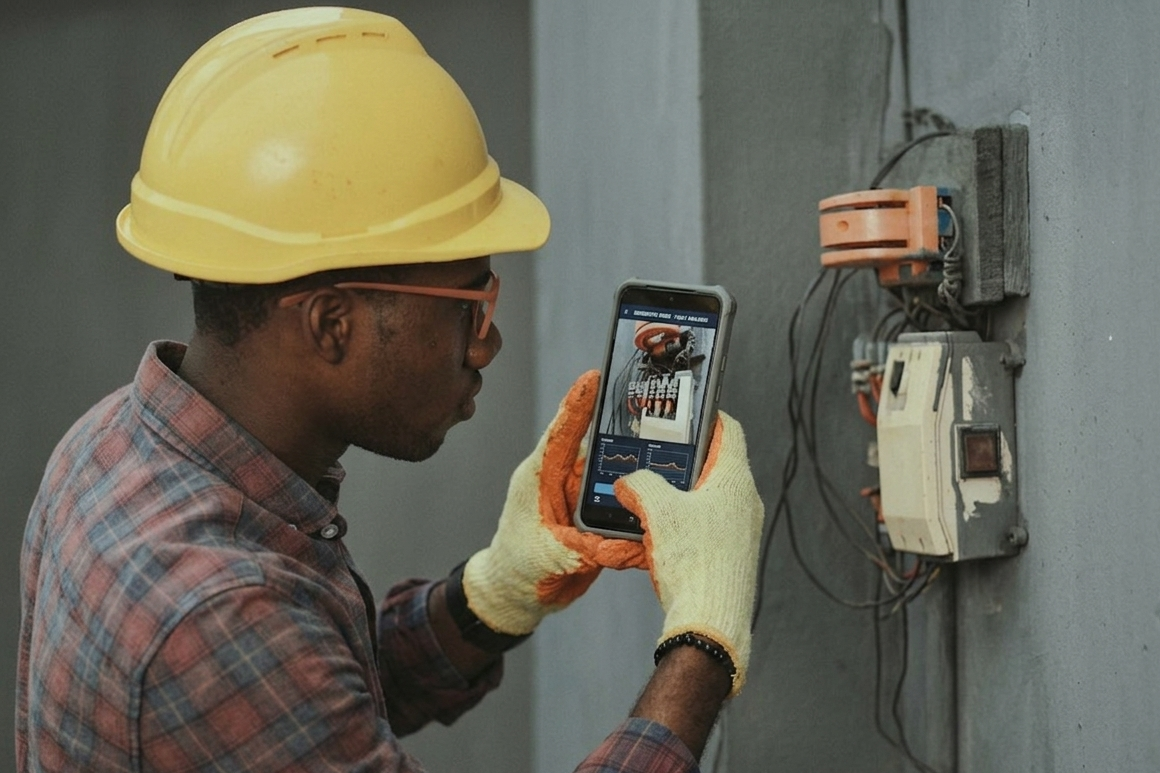
The client, a large asset‑intensive organization with a distributed field workforce, struggled with fragmented technical knowledge spread across manuals, SOPs, historical job records, and informal expert know‑how.
Technicians relied heavily on senior SMEs or manual searches, resulting in longer equipment downtime, inconsistent repair quality, safety risks, and limited scalability as the workforce and asset base grew.
We designed and implemented a secure, enterprise‑grade Generative AI assistant that centralizes proprietary knowledge and delivers real‑time, role‑appropriate guidance to technicians at the point of need to improve resolution speed, safety compliance, and operational efficiency.
Our Approach
Secure, Source‑Backed Generative AI Platform
We built a private, governed AI assistant that ingests only approved enterprise knowledge sources and delivers answers grounded in trusted content rather than public or hallucinated data.
Key Issues Solved:
Reliance on tribal knowledge and informal expert escalation
Risk of inaccurate or non‑compliant answers from public AI tools
Lack of governance over proprietary technical information
Knowledge Structuring & Multi‑Format Ingestion
We designed a structured ingestion pipeline to normalize manuals, SOPs, job cards, images, and training videos, linking each asset to rich equipment metadata such as model, year, and configuration.
Key Issues Solved:
Disconnected documents with no shared context
Difficulty locating the right information for specific equipment variants
Low trust in AI responses due to poor data structure
Retrieval‑Augmented Generation (RAG) & Evaluation Framework
The solution uses Retrieval‑Augmented Generation (RAG) to ensure every response is grounded in validated sources, supported by continuous evaluation and accuracy monitoring.
Key Issues Solved:
Inconsistent answers across similar repair scenarios
Lack of explainability and traceability in AI outputs
No feedback loop to improve response quality over time
Field‑First, Technician‑Centric Experience
The assistant was designed specifically for frontline use, with mobile‑first UX, voice input, and simplified step‑by‑step guidance optimized for real working conditions.
Key Issues Solved:
Manual‑heavy documentation unsuitable for field environments
Time lost navigating long manuals during active repairs
Safety risks caused by missed or overlooked precautions
Safety, Compliance & Escalation Controls
Context‑aware safety warnings, PPE recommendations, and SME escalation paths were embedded directly into the workflow to ensure safe and compliant execution.
Key Issues Solved:
Missed safety steps during time‑critical repairs
Over‑dependence on limited subject matter experts
Lack of standardized safety enforcement in the field
Business Impact & Results
~5% productivity improvement, translating to ~$3M in annual efficiency gains
Reduced mean time to resolution through faster diagnostics and guided repairs
Lower SME dependency, freeing experts to focus on high‑value work
Improved safety compliance with context‑aware, non‑bypassable warnings
Enterprise‑ready foundation for expansion into image recognition, voice interaction, and advanced diagnostics
Scalable architecture supporting rollout across additional asset categories and regions